Ohan Province
The Deer KingOhan Province is the Zolian imperial province that occupies the former Kingdom of Aquafa. Its history in the novel is shaped by a double transformation: Aquafa’s established population is reorganized under imperial rule, while settlers from Zol’s frontier are moved westward to remake the territory as a Zolian society. Tax records and migration maps make this change legible as administration; the lives of displaced clans, struggling households, and settlers reveal its unequal consequences.
From Kingdom to Province
Aquafa secured a place within the expanding Zolian Empire by allying itself with the conquerors, becoming a province whose inhabitants could be treated as ordinary citizens. That arrangement did not extend to every people within its former borders. The mountain clans of the Toga region spoke Aquafa’s language and had fought to defend its frontier, yet they had previously lived with a degree of independence under the King of Aquafa, and Zol refused to recognize them as Aquafaese citizens. Their history shows that incorporation into the province did not mean equal inclusion: imperial rule drew new distinctions between people who had shared a kingdom.
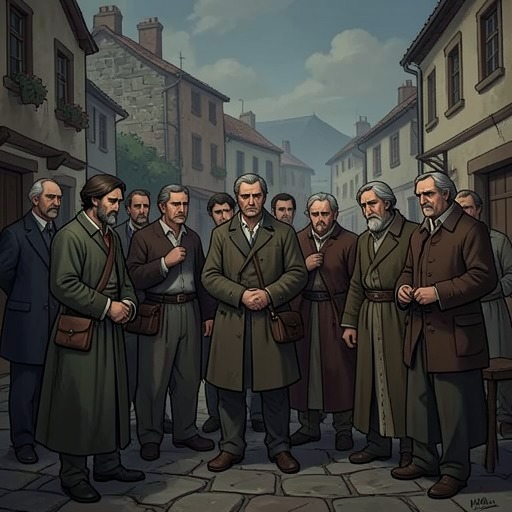
The difference had immediate consequences for where people could live. Zolian policy relocated lower castes to other conquered territories. When the Gansa leaders faced the empire’s advance into Toga, they feared that failing to obtain ordinary citizen status would force their clans from their homeland into an unfamiliar and precarious life elsewhere. The former king could negotiate only to spare their lives; he could not determine their status under the empire’s frontier administration. The province’s borders therefore marked not merely a change of sovereign, but a system for sorting inhabitants and assigning them different futures.
Settlement as Frontier Policy
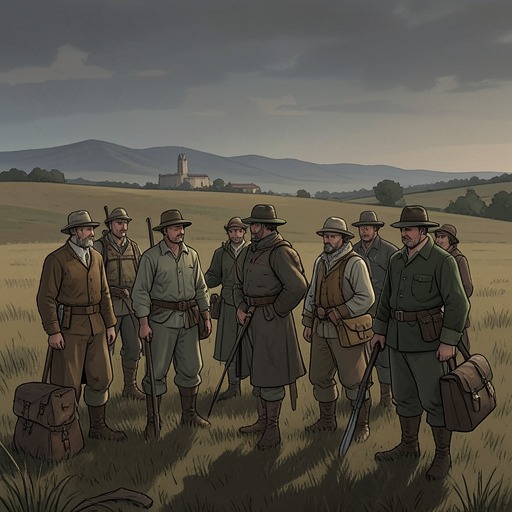
The empire’s transformation of Aquafa proceeded through settlement as well as conquest. Poor farmers and herders from the edges of the Zolian realm were ordered to move into newly conquered frontier territories, where they established Zolian-style communities, cultivated crops and raised livestock favored by Zolians, and built towns according to Zolian practice. The settlers served as an unarmed vanguard: by living among the conquered population and changing how the land was used, they helped make new territory Zolian before the political transformation was complete in everyday life.
A map of imperial migration makes the scale and direction of this policy visible. Its colors mark the regions where frontier immigrants settled, its arrows trace their movements, and its numbers show the order in which settlements formed. Across the empire, settlement was especially concentrated in the west; within that pattern, Ohan Province stands out. The density of the mapped settlements there points to the effort devoted to colonizing Aquafa, a priority associated with the province’s position beside the powerful Kingdom of Mukonia.
The settlers’ circumstances were not those of imperial officials or prosperous colonists. They were poor people ordered away from their homes, with little prospect of returning. The policy brought material advantages: their taxes were lower than they would have been at home, and land they cleared for farming became theirs. But those benefits did not cancel the cost of permanent displacement. The novel’s account of a settler who had been forced to leave her homeland gives that cost a personal shape: the suffering of the province’s transformation was borne not only by its conquered inhabitants, but also by migrants made instruments of the empire’s expansion.
Administration and Unequal Livelihoods
The empire’s reach into Ohan Province depended on information as well as movement. Its tax officers collected details about nomadic communities in remote areas, including the Oki Valley and the Toga Mountains. Their records categorized groups and counted the people living in each place, including their ages. Although some people hid in the woods when officers arrived, the resulting information was considered accurate enough to help locate Broken Antler Van, a fugitive whose whereabouts had frustrated the authorities. The same apparatus that made remote populations countable for taxation could thus be used to find individuals.
Taxation also shaped household decisions. Tohma’s family struggled to make ends meet while paying a head tax on every reindeer. Zolian ancestry reduced the tax for Kiya and Tohma, but did not ease the burden enough to secure the family’s livelihood. In desperation, Ohma sold some reindeer and tried raising pyuika, which were taxed less heavily. His lack of experience made the breeding effort unsuccessful, leaving the household close to disaster. The episode shows how imperial fiscal categories could influence the animals a family kept, without guaranteeing that a tax-saving change would be viable.
Land, Migration, and the Epidemic Investigation
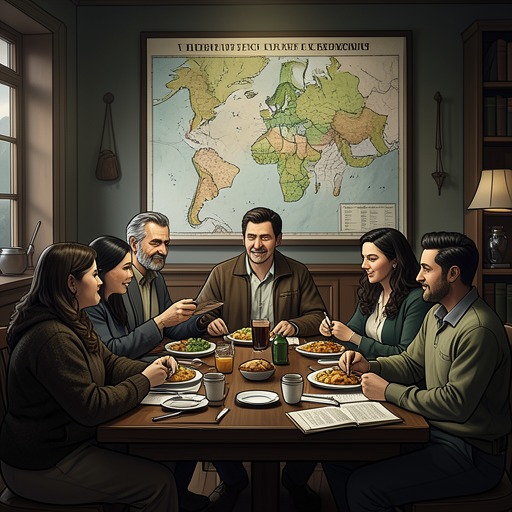
The settlement pattern also altered the relationship between people and land. Hohsalle observes that immigrants were placed in plains and forests with comparatively low population density, areas that could appear to offer abundant room. Tomasolle challenges that assumption: these regions supported distinctive plant life and the animals dependent on it. The Yukata Plains might resemble Zol’s fields, but their vegetation was different; converting them to sheep pasture and rye cultivation was bound to disturb the existing balance. The map’s neat arrows and settlement markers therefore carry a consequence beyond demography: the administrative idea of available land can obscure the ecological systems already sustaining it.
Ohan Province’s records and geography also become important to the investigation into mittsual-like illness. A map of reported cases shows symptoms distributed across the former Kingdom of Aquafa, from the Yukata Plains in the south to the Oki forests in the north. The oldest case identified by the investigators dated back eight years, placing the disease evidence well before the salt mine incident. These findings complicate the idea that the crisis began with a single local disaster and make the province’s broad territory, scattered populations, and accumulated records central to understanding the outbreak.
Significance
Ohan Province is portrayed as both a place and a governing project. Its incorporation into Zol produced different legal and economic positions for Aquafa’s inhabitants, mountain clans, and Zolian settlers; relocation and settlement then carried imperial influence into households and landscapes. Population counts helped officials manage distant communities, while maps exposed the deliberate concentration of newcomers and the spread of reported illness. The province’s history links conquest to ordinary systems—taxes, migration, farming, and record-keeping—and shows how those systems could reshape belonging, survival, and land without making their costs equally visible to everyone.